· Editor · 16 min read
Best STM32 Microcontrollers for Your Next Embedded Project in 2026
An STM32 microcontroller is a 32-bit chip based on the Arm Cortex processor core. STMicroelectronics makes these chips. The STM32 family includes over 1600 devices as of 2026. These devices
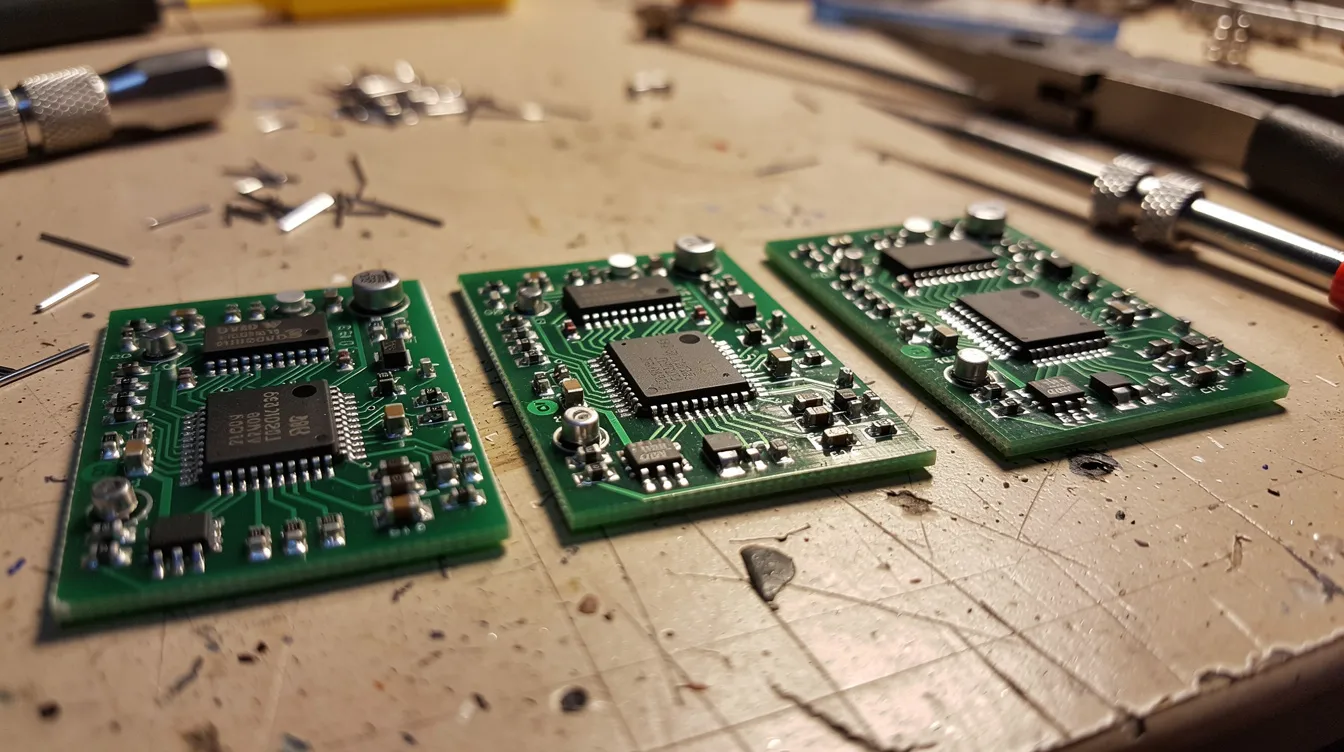
An STM32 microcontroller is a 32-bit chip based on the Arm Cortex processor core. STMicroelectronics makes these chips. The STM32 family includes over 1600 devices as of 2026. These devices integrate flash memory, SRAM, and peripherals on a single chip.
STM32 microcontrollers cover applications from IoT to industrial control. Engineers use them in consumer electronics, medical devices, and robotics. STM32 devices range from 32 MHz to 800 MHz clock speeds. That vast choice gives designers new degrees of flexibility for embedded systems of all sizes.
This article helps you pick the right STM32 series for real projects in 2026. We rank specific STM32 families for different use cases. WOOPCB designs and manufactures PCBs around STM32 MCUs. So the MCU you choose affects your PCB layout, cost, and reliability.
Here is how we built the ranking:
We reviewed ST’s current portfolio through mid-2026.
We checked distributor stock and long-term availability.
We scored each series on ecosystem maturity and community support.
We matched each family to practical project needs: budget, power, performance, and wireless.
How We Chose the Best STM32 Microcontrollers
Not all STM32 parts fit every project. We used clear criteria to filter the best options. Here are the factors we scored.
Performance: Arm core type (Cortex M0, M3, M4, M7, M33), clock speed, DSP instructions, and FPU presence.
Power consumption: Stop and standby currents, dynamic current per MHz, and fit for battery powered applications.
Peripherals: ADC resolution, timers, communication interfaces (UART, SPI, I2C, CAN, USB, Ethernet), and available peripherals for mixed signal applications.
Memory options: Flash and SRAM ranges, plus external memory interfaces where needed.
Security features: TrustZone on M33, secure boot, and crypto accelerators (AES, RNG, PKA).
Wireless integration: On-chip RF for Bluetooth LE, Thread, Zigbee, or LoRaWAN in a single chip solution.
Availability and longevity: ST’s 10-year longevity program, distributor stock, and risk of NRND parts.
Tooling and ecosystem: STM32Cube support, IDE options, code examples, and the st community.
Price and BoM impact: Unit price at typical volumes and package options that affect PCB cost.
STM32 microcontrollers support various programming environments such as STM32CubeIDE and Arduino IDE. STM32CubeIDE is a free integrated development environment. STM32 supports MicroPython for faster prototyping too. STM32 development boards support various peripherals and interfaces. STM32 microcontrollers are programmed in C and C++ languages.
The final list includes only STM32 series that solve different real-world needs.
Top STM32 Microcontroller Families for Embedded Projects
This is the main ranking section. We cover seven key STM32 series. Together, they handle most modern embedded applications.
1. STM32G0 Series – Best Budget STM32 for 8-bit MCU Replacement
The STM32G0 is a 32-bit Arm Cortex M0+ line. ST launched it to replace 8-bit and 16-bit MCUs at similar cost. It runs up to 64 MHz. Flash ranges from 16 KB to 512 KB. RAM reaches up to 144 KB in higher-end parts.
Common packages include TSSOP, QFN, and LQFP. These keep PCB area small. Typical uses include simple control boards, home appliances, and basic IoT nodes. The STM32C0 series is ST’s lowest-cost entry point for microcontrollers. But the G0 offers more peripherals at a small price step up.
Why It Stands Out
The STM32G0 offers modern peripherals and better code density than old F0 or F1 parts. It costs about the same or less. Low power consumption beats older mainstream parts. It includes a fast 12-bit ADC and multiple timers.
Migration from older STM32F0 and 8-bit designs is smooth. Many pin assignments stay similar. This helps WOOPCB customers update existing products. Some parts are even pin to pin compatible across the G0 range.
Best For
Engineers moving from AVR or PIC 8-bit parts.
Designers of low cost consumer boards (LED drivers, small motor controls, power supplies).
IoT devices that send limited data without heavy processing.
Educational projects where cost and availability matter most.
Key Strengths
Cortex M0+ arm core with good power efficiency and small c code size.
Competitive pricing and small packages that reduce PCB area at WOOPCB.
Rich peripherals: multiple UARTs, SPI, I2C, and decent 12-bit ADC.
STM32CubeMX and STM32CubeG0 support with many reference projects.
Possible Limitations
No DSP instructions or FPU. Weak for digital signal processing or motor control.
Limited RAM on cheaper parts restricts complex stacks and graphics.
Not ideal for machine learning or heavy connectivity workloads.
2. STM32G4 Series – Best for Motor Control and Digital Power
The STM32G4 combines a Cortex-M4 with motor control and analog accelerators. It includes CORDIC and FMAC math blocks. Clock speed reaches 170 MHz. Flash goes up to 512 KB. RAM reaches 128 KB plus CCM-SRAM.
Mixed-signal features stand out: up to five 12-bit ADCs at 4 Msps with simultaneous sampling ADCs, fast comparators at about 17 ns, multiple DACs, and on-chip op-amps. Target applications include motor drives, digital power supplies, inverters, and PFC stages. WOOPCB often routes these as 4-layer boards.
Why It Stands Out
The STM32G4 offers performance near older STM32F3/F4 lines. But it adds better analog and lower power consumption. Its high-resolution timers reach about 184 picoseconds. That resolution suits FOC motor control and digital SMPS loops.
ST provides robust development tools and reference designs for motor control. The software ecosystem for power conversion is mature.
Best For
Motor control engineers building BLDC/FOC controllers.
Designers of high-efficiency power converters and chargers.
Industrial automation products that need accurate sensing and control loops.
Key Strengths
Cortex-M4 core with FPU and DSP instructions for fast math.
High-resolution timers for precise PWM and dead-time control.
Fast multi-channel ADC with injected and regular groups.
CORDIC and FMAC accelerators speed up control algorithms.
Dual-bank flash for live firmware updates.
Possible Limitations
Higher cost than STM32G0 for simple logic tasks.
Complex analog features require careful PCB layout and grounding.
Overkill for basic sensor nodes that need slow sampling.
3. STM32H7 Series – Best High-Performance STM32 for Heavy Compute
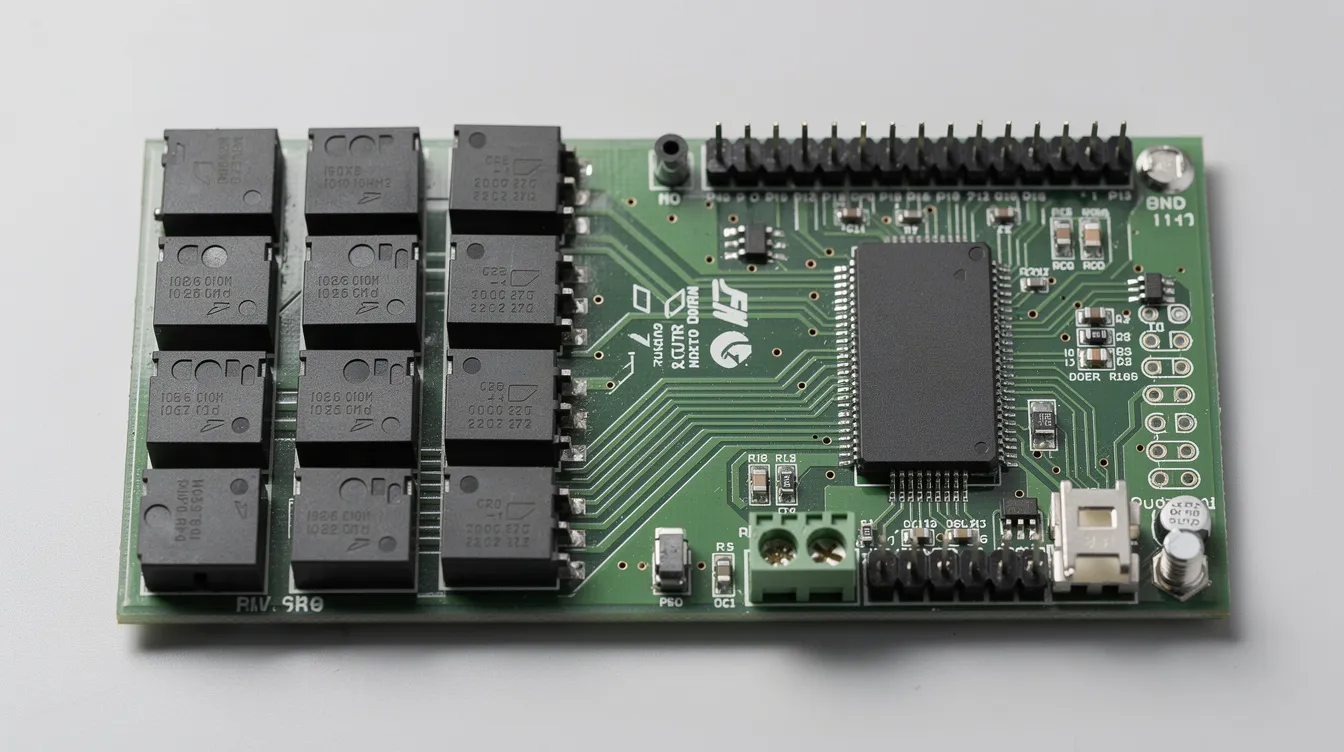
The STM32H7 is ST’s flagship. It uses Cortex-M7 cores. The STM32H7 series can reach clock speeds up to 600 MHz. Flash reaches 2 MB on chip. RAM exceeds 1 MB in many variants.
It supports external memory interfaces for SDRAM and QSPI flash. The STM32H743ZI is designed for high-performance applications. Uses include industrial control, advanced HMIs, audio processing, edge AI, and complex communication gateways.
Why It Stands Out
The STM32H7 offers very high performance. No other STM32 MCU matches its raw compute as of 2026. Dual-core variants pair an M7 with an M4. This lets you separate real time capabilities from UI or communication tasks.
Advanced peripherals include Ethernet MAC, high-speed USB, TFT display controllers, and camera interfaces. A data cache and instruction cache boost throughput. The graphical interface support includes Chrom-ART and JPEG codec in some variants.
Best For
Designers of complex control systems with multiple control loops and communication stacks.
Products needing rich graphical interfaces on color TFT displays.
Data logging or gateway devices with Ethernet, USB, and external memory.
Edge AI experiments where small neural networks run on Cortex-M7.
Key Strengths
Very high performance CPU with M7 core, caches, and higher clock speed than any other STM32.
Large on-chip SRAM. Support for external SDRAM and QSPI flash.
Graphics and multimedia peripherals for HMIs.
Robust connectivity: Ethernet MAC, high-speed USB, multiple CAN and SPI ports.
Possible Limitations
Higher price and larger packages (BGA, LQFP144+) increase PCB and BoM cost.
Cache management and memory layout make firmware more complex.
Board design needs solid high-speed layout skills. WOOPCB can handle this, but hobbyists may not.
Power supply design demands extra decoupling and clean ground planes.
4. STM32U5 Series – Best Ultra-Low-Power STM32 for Secure IoT Devices
The STM32U5 is the next-generation ultra low power line. It uses a Cortex-M33 core at up to 160 MHz. Flash reaches 4 MB. SRAM reaches 3 MB in top variants. TrustZone support is built in.
Target uses include battery-powered IoT sensors, wearables, smart locks, and connected meters. These are compact PCBs where battery life is everything. STM32 devices support low power applications with deep sleep modes that draw under 1 µA.
Why It Stands Out
The STM32U5 beats older STM32L4/L5 in both performance and energy per operation. It integrates security blocks: TrustZone, crypto accelerators, secure key storage, and active tamper pins.
Long battery life plus security suits modern IoT certification. Cloud onboarding demands encrypted connections. The U5 handles both. Its versatility makes it a strong pick for connected devices that must stay secure.
Best For
Devices that must run for years on a coin cell or Li-ion battery.
IoT nodes that send encrypted data to cloud platforms.
Medical devices or fitness wearables with strict power budgets and data protection rules.
Key Strengths
Cortex-M33 core with TrustZone hardware isolation.
Best-in-class low power modes with fast wake-up times.
Strong crypto engines for TLS and secure boot.
Rich analog and digital peripherals despite focus on low power.
NeoChrom GPU in high-end variants for display-driven applications.
Possible Limitations
More complex security configuration than older STM32L series. Expect a steeper learning curve.
Higher device cost than ultra-budget MCUs like STM32C0/G0.
Not needed for projects that never connect to a network.
5. STM32F4 Series – Best “Classic” STM32 with Huge Community Support
The STM32F4 is a mature Cortex-M4 family. It remains popular in 2026. Libraries, examples, and community projects are massive. Clock speeds reach up to 180 MHz. It includes DSP and FPU. Flash and RAM options span a wide range.
Recommended STM32 microcontrollers for beginners include the STM32F401RE and STM32F446RE. STM32 offers more processing power than Arduino boards. STM32 is better for robotics and real time processing than Raspberry Pi. Unlike MPUs with Cortex A cores that run Linux and a full operating system, STM32 MCUs focus on bare metal programming or lightweight RTOS. You do not need an operating system. However, you can run FreeRTOS for multitasking.
The Blue Pill board uses the STM32F103C8T6 microcontroller. Blue pill boards are based on the Arm Cortex M3 core. They remain popular among absolute beginners. But the F4 series offers much more performance.
Why It Stands Out
Huge community support, tutorials, and existing code make STM32F4 friendly for learning. Documentation and community resources are critical for effective learning with STM32. The learning curve is gentler here than on newer series.
STM32 Nucleo boards are widely regarded as the gold standard for beginners. Nucleo boards have integrated ST-LINK debuggers and Arduino-compatible headers. Each board includes an on board ST link for programming and debugging. ST-LINK is the standard debug probe for STM32 programming. You can also use an external ST link debugger.
The STM32 ecosystem includes Nucleo boards, Discovery kits, and generic STM32 boards. STM32 development boards include Nucleo and Discovery kits. Most development boards ship with F4 parts. Discovery boards and discovery kits target specific STM32 series with additional peripherals and external hardware. The following boards are easy to source for prototypes.
Best For
Developers who want a proven STM32 platform with lots of sample code.
Students and makers using Nucleo or evaluation boards.
Legacy projects that WOOPCB customers want to refresh without full redesign.
Key Strengths
Cortex-M4 with DSP and FPU suits signal processing and control tasks.
Massive software ecosystem of libraries, books, and forum posts.
Wide range of package sizes and memory options. Most pins are well documented.
Stable and mature STM32CubeF4 support.
Possible Limitations
Higher power consumption than newer U and G series at the same workload.
Some variants approach end of life. Check lifecycle before new designs.
Lacks modern security features like TrustZone found in M33-based parts.
6. STM32WB Series – Best STM32 with Integrated Bluetooth LE and 2.4 GHz Mesh
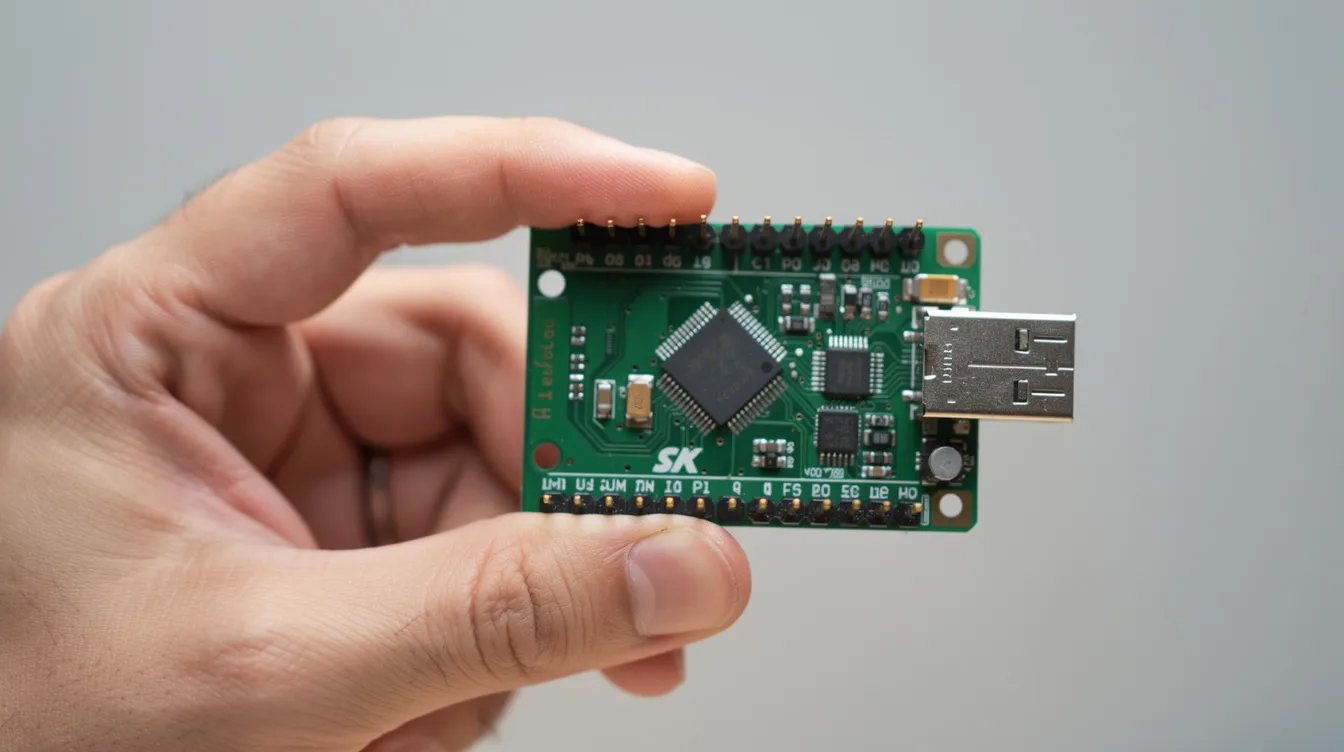
The STM32WB is a dual-core wireless MCU. It pairs a Cortex-M4 for application code with a Cortex-M0+ network processor for the radio stack. It supports BLE (Core 5.4), Thread, Zigbee, and Matter. Flash reaches up to 1 MB.
Uses include wireless sensors, smart home products, beacons, and Matter-ready devices. WOOPCB often lays these out as compact RF boards. Full integration of MCU and radio on one die cuts BoM cost.
Why It Stands Out
The STM32WB integrates MCU and radio. This cuts PCB area compared to discrete RF modules. ST provides pre-certified protocol stacks. That eases regulatory and interoperability work for wireless applications.
However, ST has deprecated Matter support on some older parts like WB55. Newer WBA6 parts get priority. Check SDK support before you commit.
Best For
BLE sensors and beacons with custom application logic.
Smart lighting, switches, and access control devices.
Gateways and border routers that speak Thread or Zigbee.
Key Strengths
Integrated multi-protocol 2.4 GHz radio reduces component count.
Dedicated M0+ core runs radio stack without loading the application core.
Good selection of low power modes tailored for wireless duty cycles.
Reference designs from ST help with RF layout and antenna design. WOOPCB can adapt these.
Possible Limitations
RF layout and antenna matching demand strict PCB design rules.
Radio certification and compliance testing add project cost.
More complex toolchain setup than non-wireless MCUs because of radio firmware and stacks.
7. STM32WL Series – Best STM32 for LoRa and Sub-GHz LPWAN
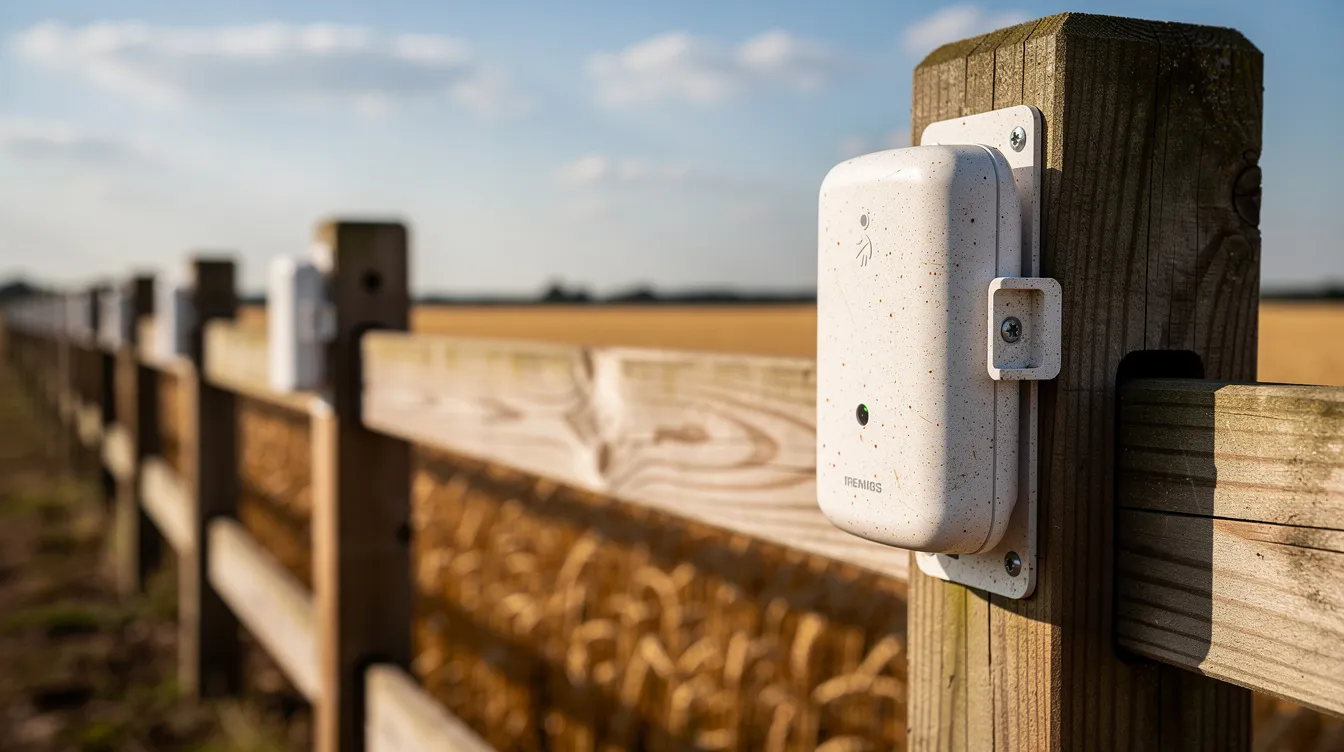
The STM32WL is an integrated sub-GHz wireless MCU line. It supports LoRaWAN and other LPWAN protocols. It uses a Cortex-M4 core plus an integrated sub-GHz radio transceiver. Industrial temperature options cover harsh environments.
Uses include smart meters, agriculture sensors, and city infrastructure monitoring. WOOPCB builds outdoor-rated boards for these deployments.
Why It Stands Out
The STM32WL removes the need for separate LoRa transceiver ICs. ST provides reference LoRaWAN stacks and example firmwares. Long-range, low power communication is the key advantage. RX current sits at about 4.82 mA. TX at 10 dBm draws about 15 mA. TX at 20 dBm draws about 87 mA. Shutdown mode drops to about 390 nA.
An integrated SMPS boosts power supply efficiency. Active MCU current stays under 71 µA/MHz with RF off.
Best For
Battery-powered sensors that transmit data over kilometers.
Smart city and smart agriculture projects with dense node deployments.
Industrial telemetry where running cables is hard or dangerous.
Key Strengths
Integrated sub-GHz radio with support for LoRa, (G)FSK, and other modulations.
Cortex-M4 core with enough performance for sensing and local processing.
Optimized low power modes for long battery life in field nodes.
Small packages support compact outdoor enclosures with careful RF layout by WOOPCB.
Possible Limitations
Sub-GHz antenna design and matching require specific PCB constraints.
LoRaWAN network access depends on gateway availability or public networks.
More complex regulatory testing across regions (EU, US, Asia) due to RF bands.
Quick Comparison of the Best STM32 Microcontroller Families
Here is a scan-friendly summary. Use it to narrow your search fast.
STM32G0 – Best for low cost general-purpose designs and 8-bit MCU upgrades.
STM32G4 – Best for motor control, digital power, and mixed signal control loops.
STM32H7 – Best for high performance control, rich HMIs, and compute-heavy firmware.
STM32U5 – Best for secure, ultra low power IoT devices and wearables.
STM32F4 – Best for learning STM32 and leveraging huge existing code bases.
STM32WB – Best for Bluetooth LE, Thread, and Matter smart home products.
STM32WL – Best for LoRaWAN and long-range sub-GHz sensor networks.
Filter your options by your main constraint: budget, power, performance, or wireless.
How to Choose the Right STM32 Microcontroller
Do not pick by clock speed alone. A fast chip with the wrong peripherals wastes money. This section walks through the main decision factors.
Choose Based on Power Budget and Battery Life
Power budget comes first for battery devices. Estimate your active and sleep time per day. Then check the datasheet current vs. voltage graphs.
The STM32U5 excels in low power applications. Its deep sleep draws under 1 µA. The STM32G0 is also cost effective for simple low power nodes. But the G4 and H7 draw much more current in active mode. They are not ideal for coin-cell designs.
Use STM32CubeMX power calculators early in design. STM32CubeMX generates initialization code and estimates power draw. Clean ground planes, proper decoupling, and careful power routing on your PCB help you hit low power specs. WOOPCB pays close attention to these layout details.
Choose Based on Performance and Signal Processing Needs
Control loops, audio, and sensor fusion need DSP and FPU. That points to Cortex-M4, M7, or M33 Arm Cortex M cores.
The STM32G0 and C0 lack DSP instructions. They cannot handle digital signal processing or fast math. The STM32G4, F4, U5, and H7 all include FPU and DSP instructions.
Here are examples to guide your choice:
FOC motor drives and PFC → STM32G4.
Complex HMIs and gateways → STM32H7.
Standard control and audio processing → STM32F4 or U5.
Factor in available RAM and flash when you choose for RTOS or heavy middleware. The STM32 family spans from 8 KB to 4 MB of flash memory. Pick enough headroom. STM32CubeMX handles code generation and clock trees configuration to help you start fast.
Choose Based on Connectivity and Security Requirements
Wireless and security requirements narrow the choice faster than raw performance.
Wireless guidance:
Need BLE or Thread → STM32WB.
Need LoRaWAN or sub-GHz → STM32WL.
Need Ethernet or USB high-speed → consider STM32H7 or some STM32F4 variants.
Security guidance:
Need secure boot and TrustZone → pick STM32U5 or other Cortex-M33 lines.
Local-only, offline products → security can be simpler. STM32G0/G4 may be enough.
WOOPCB can help align MCU choice with connector layout, RF zones, and shielding on the PCB. For embedded applications that demand both wireless and security, plan your board stackup early.
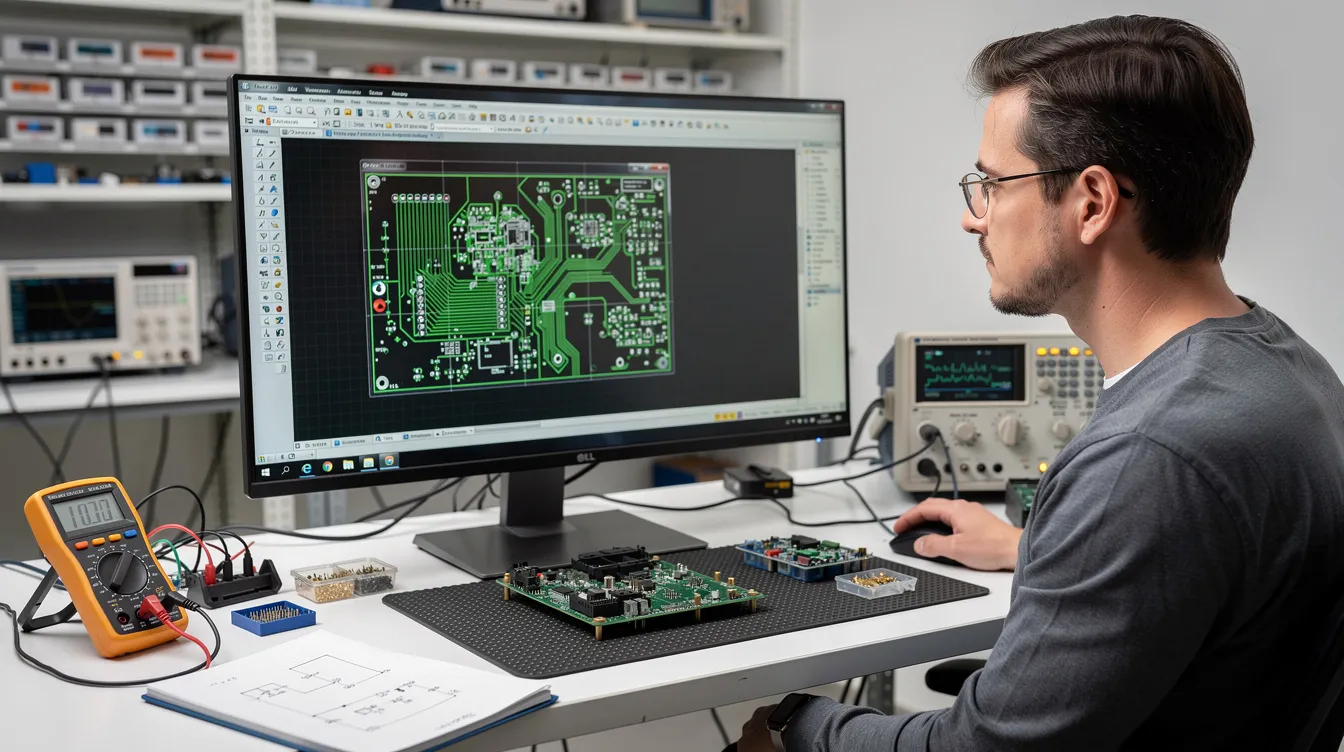
Which STM32 Microcontroller Is Best for You?
Here is a quick decision guide. Match your main need to a series.
Choose STM32G0 if you need the lowest cost 32-bit STM32 for simple control boards.
Choose STM32G4 if your project centers on motor control or digital power conversion.
Choose STM32H7 if you run complex firmware, heavy communication stacks, or rich graphics.
Choose STM32U5 if long battery life and IoT-grade security are top priorities.
Choose STM32F4 if you want mature development tools, countless examples, and smooth learning.
Choose STM32WB if you build Bluetooth LE or Matter smart home devices.
Choose STM32WL if you deploy long-range LoRaWAN or sub-GHz sensor networks.
Share your constraints with WOOPCB. We can align MCU and PCB design from day one.
Final Thoughts
The STM32 family offers a full spectrum. It spans from ultra-cheap controllers to high-end wireless and HMI devices. The “best” STM32 depends on power, performance, connectivity, security, and budget. It does not depend on brand loyalty or clock speed alone.
Choose your MCU early. Pair it with your PCB constraints from the start. That avoids costly redesigns later. WOOPCB supports this process every day.
Define your project needs first. Then pick the STM32 family that fits. If you need help with PCB design around your chosen STM32, contact WOOPCB. We will get your board right the first time.