· Editor · 8 min read
What Is Chip on Board? A Practical Guide to COB LED Technology
COB technology is everywhere, from stage lighting to smartwatches. This guide explains what chip on board means, breaks down five COB LED types, and helps you pick the right one.
COB technology is everywhere-from stage lighting to smartwatches. This guide explains what chip on board means, breaks down five COB LED types, and helps you pick the right one.
What Is Chip on Board (COB)?
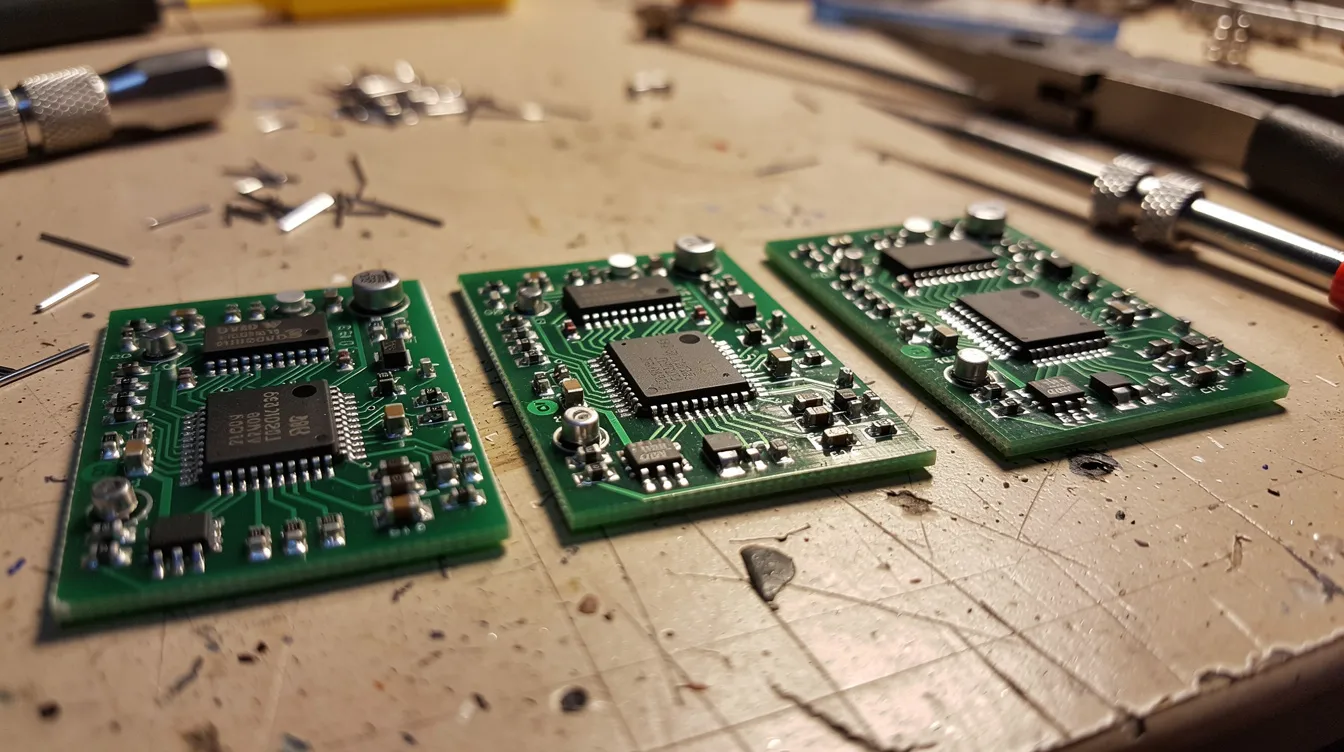
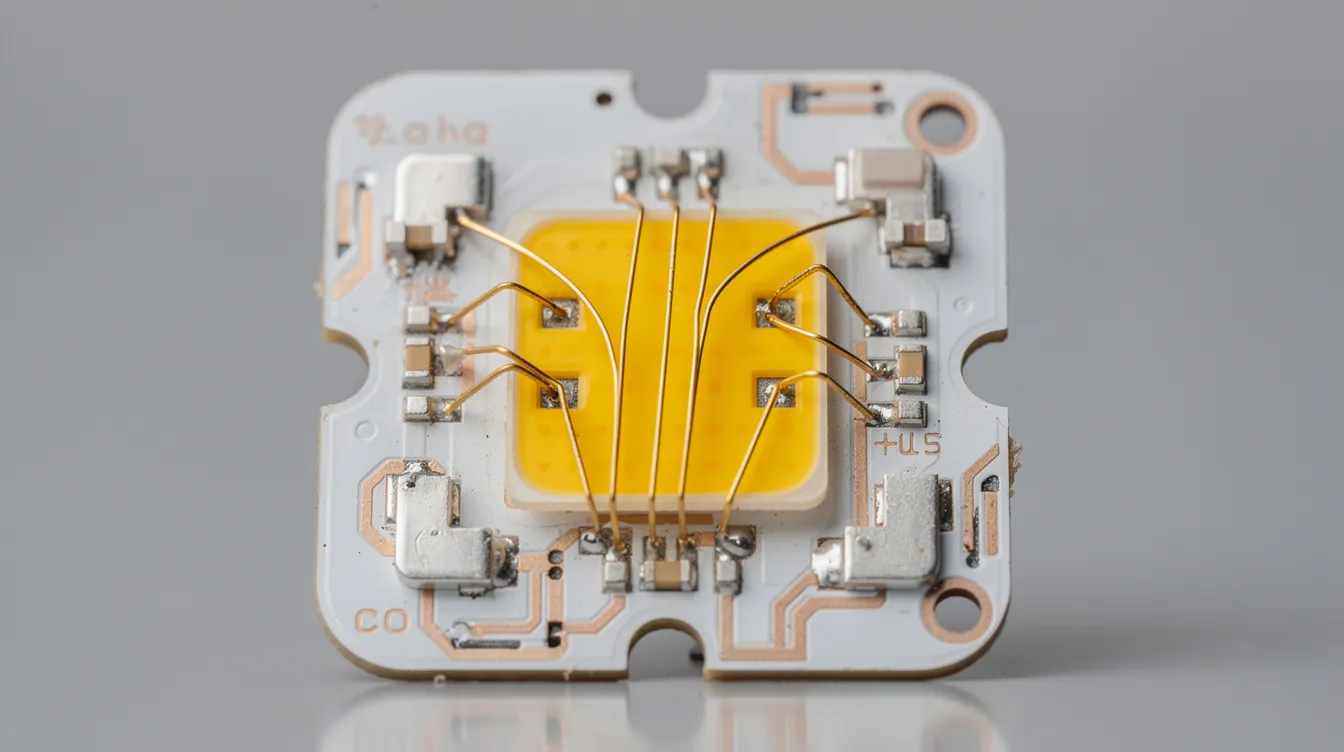
Chip-on-Board (COB) is a technique for mounting bare semiconductor dies on a printed circuit board or substrate. It removes traditional plastic packages and lead frames. The result is a smaller, lighter, cooler assembly.
COB production involves seven standardized manufacturing steps. Die attach uses automated tools for precise positioning on the board. Electrical connections come from wire bonding (aluminum or gold wires) or flip-chip bumps. Electrical bonding ensures stability of circuit connections. Then COB LEDs are encapsulated with epoxy resin cured by UV or heat to protect the chip from mechanical damage.
Here’s why COB matters:
COB consumes 30% to 60% less board area than traditional chips.
It reduces total cost to about one-third of traditional packaging.
COB reduces raw material waste by eliminating packaging.
COB reduces the footprint and height of electronic components. This enables compact designs in tight spaces.
COB is commonly used in consumer electronics like smartwatches, calculators, and toys. It miniaturizes wearable electronics like hearing aids. COB PCBs are used in portable medical testing instruments. It is also utilized in automotive electronics for ambient light controllers. In 2024, Bridgelux released Gen-9 COB LEDs reaching about 200 lm/W for warm white. The global COB LED market hit roughly $3.4 billion in 2024 and may reach $7.5 billion by 2030.
How We Evaluate COB Solutions and COB LED Types
Readers often compare COB LED types, not just ask for a definition. The “best” COB chip on board approach depends on thermal needs, power level, substrate choice, and target application.
Key Evaluation Criteria for COB Designs
Thermal performance – How fast heat moves from the bare die to the heat sink. Effective thermal management is crucial for maintaining COB LED performance. Thermal vias under high power dies speed up heat dissipation.
Power density – Watts or lumens packed into a set area on a single substrate.
Reliability – Resistance to vibration, moisture, and thermal cycling. A DOE/RTI aging study confirmed strong reliability under recommended conditions.
Size and weight – COB supports thin, light devices compared with surface mount device packages.
Manufacturing cost – Fewer packages save cost at scale. But the manufacturing process needs specialized bonding gear.
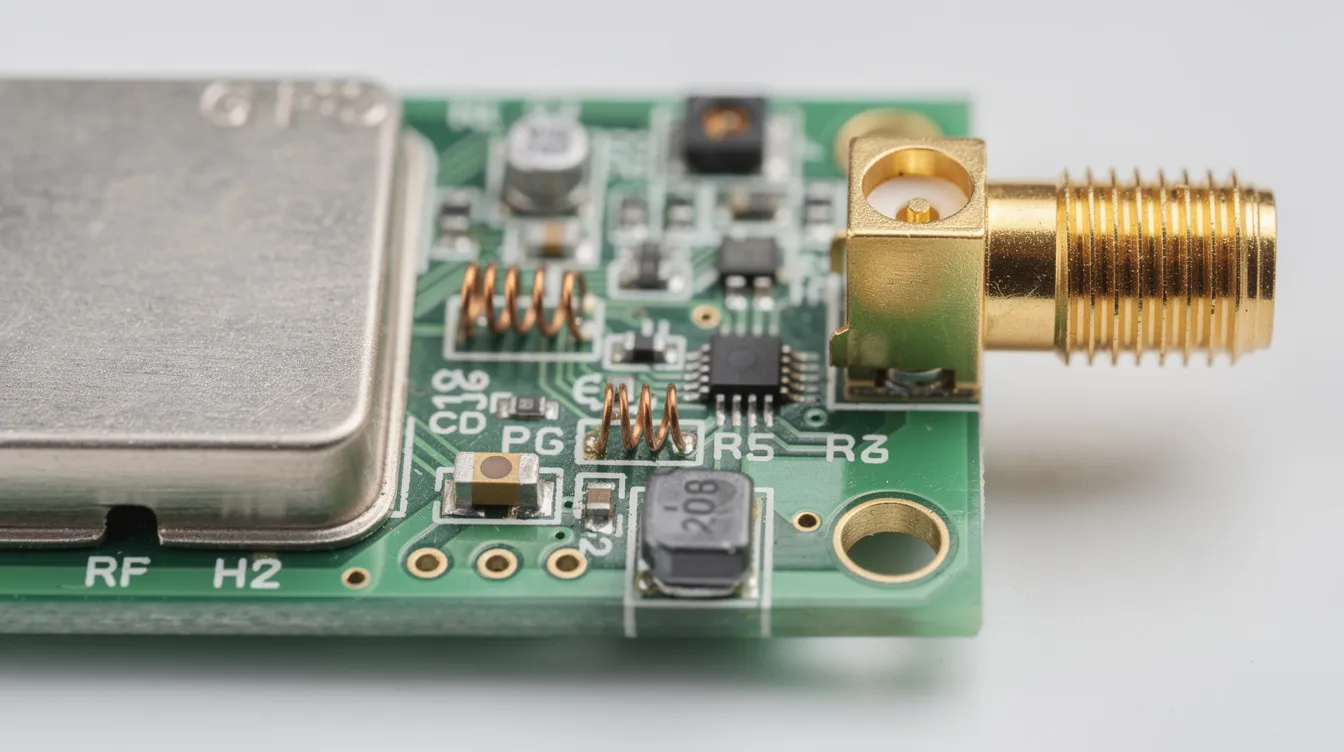
Signal integrity – Short traces lower parasitics for RF and high-speed circuits.
Serviceability – Faulty dies in COB cannot be replaced after epoxying. Testing bare dies before encapsulation is more complex than testing packaged chips.
Top 5 Chip on Board LED Types and Use Cases
These are not brand rankings. They reflect five common COB LED categories for various applications in 2024–2025.
1. High-Power White COB LEDs for General Lighting
High power white COB LED modules range from 10 W to 200 W. They serve streetlights, industrial high bays, and commercial lighting fixtures.
Why This COB Type Stands Out
COB technology offers higher lumen density than older LED technologies. COB LEDs use multiple diodes for higher lumen density, and high-density LED lighting utilizes COB to pack multiple LED chips closely together. COB LEDs have a single circuit design with two contacts. Light output is uniform with no visible dots.
Best For
Lighting OEMs, retrofit module makers, and facility managers planning LED upgrades.
Key Strengths
High lumen density in small footprints for compact luminaires.
Uniform illumination without multi-shadow effects from separate SMD LEDs.
COB LEDs have lower thermal resistance than SMD LEDs. High-density COB designs improve heat dissipation.
COB technology uses multiple diodes for better thermal stability.
COB can lower production costs due to reduced materials and steps.
Possible Limitations
High junction temperatures if designers under-size heat sinks. TU Delft research showed color shifts at elevated case temps.
You cannot swap a single failed LED die after encapsulation.
Less flexible color tuning than multi-channel boards.
2. Bi-Color CCT-Tunable COB LEDs
These devices mix warm and cool white LED chips on one ceramic substrate. Many 2024–2025 smart fixtures use COB with 2700–6500 K tunable CCT. Luminus expanded its Gen 2 tunable COB portfolio with multiple CCT ranges and over 90 CRI.
Why This COB Type Stands Out
Smooth white tuning supports “human centric” lighting. On-board mixing creates uniform beam quality across the full spectrum of color temperatures.
Best For
Interior designers, smart home builders, and office lighting planners.
Key Strengths
Wide CCT range from one compact light source.
Uniform beam even while color temperature changes.
Simple optics compared to separate warm and cool engines.
Possible Limitations
- Requires more complex driver circuits. Efficiency can drop at mixed CCT settings.
3. RGBWW COB LEDs for Stage, Film, and Studio
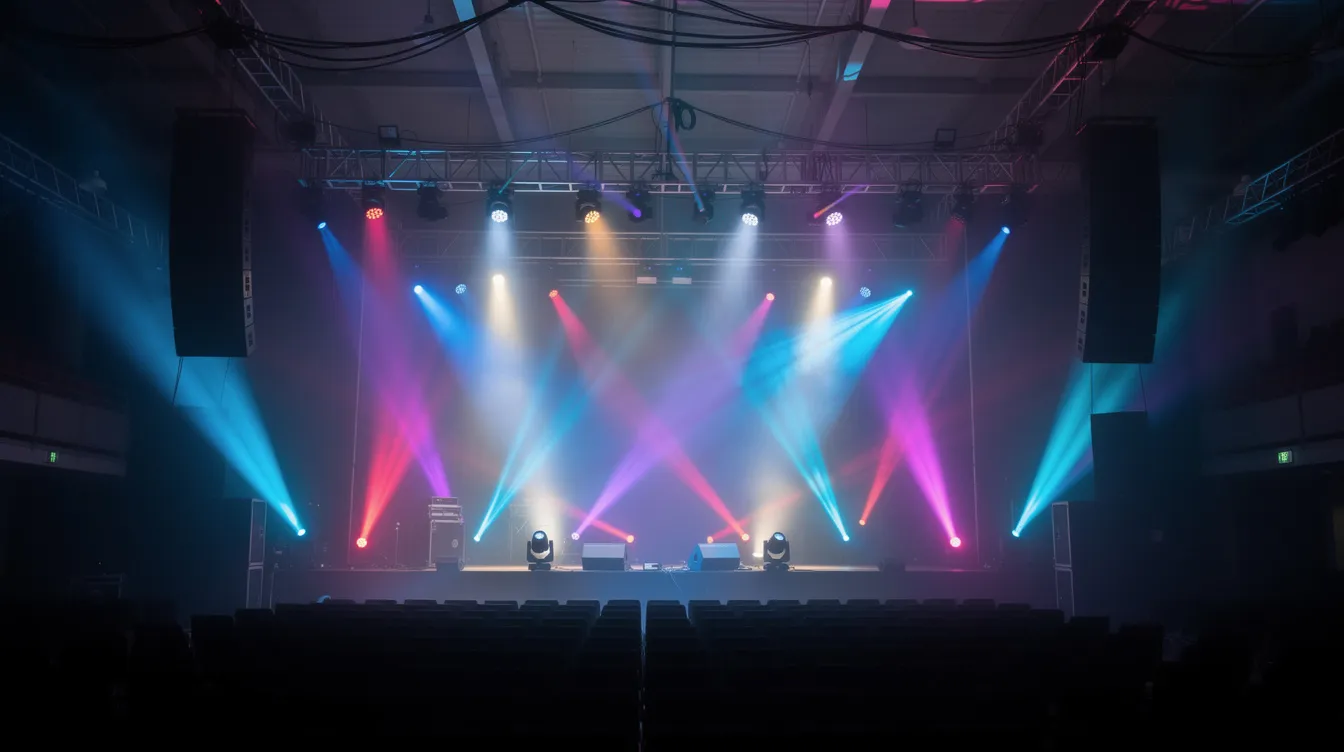
RGBWW COB modules combine red, green, blue, warm white, and cool white dies on one chip area. They are widely used in cinema and live event stage lighting.
Why This COB Type Stands Out
Full-color output with high CRI and TLCI suits cameras. COB LEDs provide high-intensity illumination for photography lighting with smooth, flicker-free dimming.
Best For
Filmmakers, content creators, live event lighting designers, and rental houses producing videos.
Key Strengths
Wide color gamut in one emission surface for clean shadows.
Fast transitions since all channels share one optical path.
High brightness and intense color saturation.
Possible Limitations
More heat per unit area demands robust cooling. Direct contact with a good heat sink is essential.
Drivers and control gear cost more compared to simple white COB drivers.
4. Horticulture COB LEDs
Horticulture COB LEDs are tuned for plant growth. They combine blue, red, and broad-spectrum dies on one array. Adoption grew after 2018 and strengthened toward 2024.
Why This COB Type Stands Out
Optimized spectra target peaks around 450 nm and 660 nm. High PPFD delivery to the canopy uses simplified optics.
Best For
Commercial growers, controlled environment agriculture, and high-end hobby growers.
Key Strengths
High photon output per module reduces fixture part count.
Uniform canopy coverage with good secondary optics.
Stable spectra across long operating hours with quality phosphors.
Possible Limitations
- Higher cost per module than generic white COBs. Careful thermal design protects against a reduction in long lifespan at greenhouse temperatures.
5. Mini / Micro Display COB Arrays
Mini and micro LED COB arrays create dense pixel arrays for fine-pitch displays. COB mounting on glass or advanced PCBs enables sub-millimeter pixel pitches. This technology is suitable for control rooms, cinemas, and AR/VR panels.

Why This COB Type Stands Out
Pixel density and brightness far exceed traditional LEDs. Fewer failure points compared to discrete SMD pixels at tight pitches improve durability.
Best For
Display manufacturers, signage integrators, and AR/VR device makers.
Key Strengths
Fine pixel pitch for smooth images at short viewing distances.
High contrast with careful encapsulant choices. The covered area is optimized for black matrix design.
Better protection against mechanical stress than fragile SMD arrays.
Possible Limitations
Complex manufacturing and repair. COB technology requires specialized bonding equipment for prototyping.
High entry cost for tooling and inspection. Yield demands are intense at micro LED scale.
Quick Comparison of Key COB LED Types
High-power white COB – Best for streetlights, high bays, and commercial downlights needing raw lumen output.
Bi-color CCT-tunable COB – Best for residential and office spaces that adjust white tone through the day.
RGBWW COB – Best for stage, film, and studio work where color control matters.
Horticulture COB – Best for indoor farms needing plant-optimized spectra.
Mini / micro COB arrays – Best for fine-pitch LED displays and emerging AR/VR screens.
How to Choose the Right COB Approach for Your Project
Your choice depends on application, board material, power, and budget.
Choose Based on Power and Thermal Load
High power devices (50–300 W LED engines) benefit from COB’s shorter thermal paths. Check thermal resistance (RθJC) data. Use aluminum-core or copper-core boards for heavy loads. FR-4 is only suitable for low-power COB dies.
Choose Based on Optical and Mechanical Needs
A single, uniform light spot favors COB. Spotlights and camera lights benefit from this approach. But long flexible strips may suit SMD or CSP better. SMD LEDs can have up to three diodes per chip. SMD LEDs are also more versatile for color-changing applications. COB LEDs provide better thermal management than SMD LEDs when performance and optimal performance in heat dissipation matter most.
Choose Based on Cost, Scale, and Serviceability
COB reduces per-unit cost at scale. But low-volume prototypes might cost more due to setup overhead. Reworking an encapsulated bare die is hard. So set clear reliability targets before production.
Which COB Option Fits You Best?
Choose high-power white COB if you design bright general lighting and need maximum lumens in compact fixtures.
Choose bi-color CCT COB if you build tunable white luminaires for homes, hotels, or offices.
Choose RGBWW COB if you focus on film, studio, or stage fixtures with full color control.
Choose horticulture COB if your priority is plant growth, not just human visual comfort.
Choose mini / micro COB arrays if you work on fine-pitch displays or next-generation AR/VR systems.
Final Thoughts on Chip on Board Technology
COB is a packaging strategy, not a single product. Its ability spans LEDs, sensors, RF chips, and more. COB shines where designers need high power in tight spaces, low thermal resistance, and clean optics. Flip-chip COB, improved encapsulants, and micro LED COB for displays will push this versatile technology into new markets. Match your project’s demands to the right COB type-and build from there.